Introduction
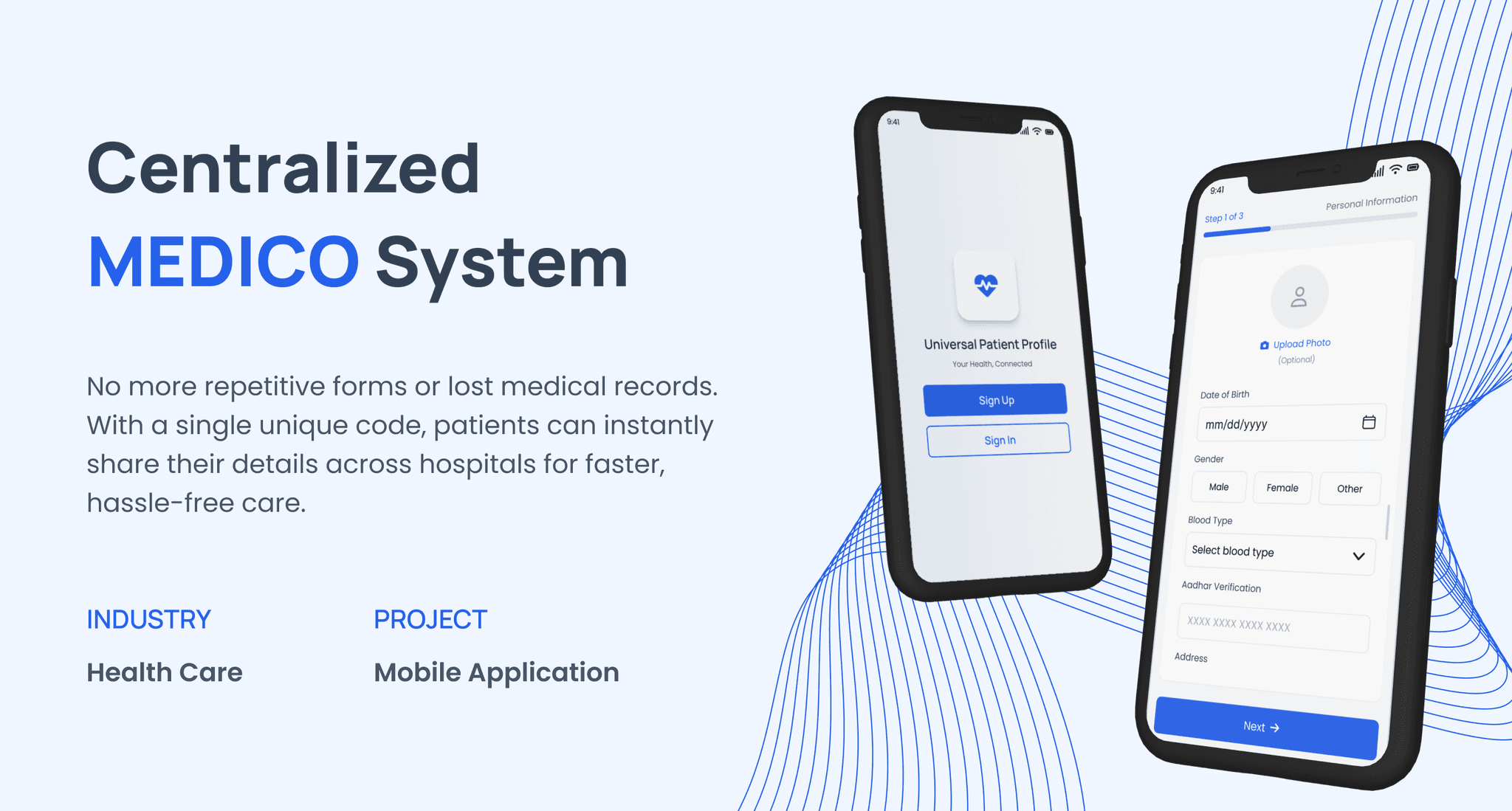
Welcome to a deep dive into one of the most impactful healthcare innovations I’ve envisioned—the Universal Patient Profile System (UPPS).
The idea came to me after visiting some of Hyderabad’s best hospitals—Care Hospitals, AIG, Continental, Apollo, Yashoda—and realizing the inefficiencies in patient data management. Every hospital required me to fill out the same forms, get a physical file, and maintain paperwork for future visits. The next time I needed care, I had either forgotten my previous file or had to refill the same forms from scratch.
A system like this might already exist in other countries, but for India—the world’s most populous country—this could be life-changing. With millions of households, extensive health insurance data, and vaccination records, a unified digital solution would transform the way hospitals manage patient information, eliminating redundancies and improving care delivery.
Beyond just benefitting patients and hospitals, this system can be a game-changer for the government, enabling better public health management, policy-making, and resource allocation.
Challenge
Every great product begins with a critical problem that needs solving. In India’s multi-specialty hospital ecosystem, patient data management is highly fragmented and inefficient.
Key Challenges:
Repetitive Data Entry: Patients fill out the same forms at every hospital, wasting time and effort.
Lost Medical History: Patients often forget or misplace previous medical files, leading to disjointed treatment plans.
Inefficient Insurance Processing: Hospitals manually verify insurance, causing delays in approvals and claims.
Lack of Emergency Readiness: In urgent situations, critical patient details (allergies, blood type, existing conditions) aren’t immediately accessible.
Data Silos Between Hospitals: A patient’s medical history at one hospital isn’t available at another, forcing redundant tests and diagnostics.
Business Impact for Hospitals:
Operational inefficiencies due to manual patient registration and paperwork.
Longer wait times impacting patient experience and hospital reputation.
Lost revenue opportunities from insurance delays and lack of preventive care programs.
Challenges for the Government:
Lack of centralized health records: Making it difficult to track diseases, vaccination coverage, and outbreaks.
Inefficient public health initiatives: No streamlined way to ensure citizens are receiving required treatments.
Insurance fraud risks: Difficulty in validating legitimate claims under government healthcare schemes.
Delayed response to health crises: Inability to access real-time patient data during pandemics or emergencies.
Solution
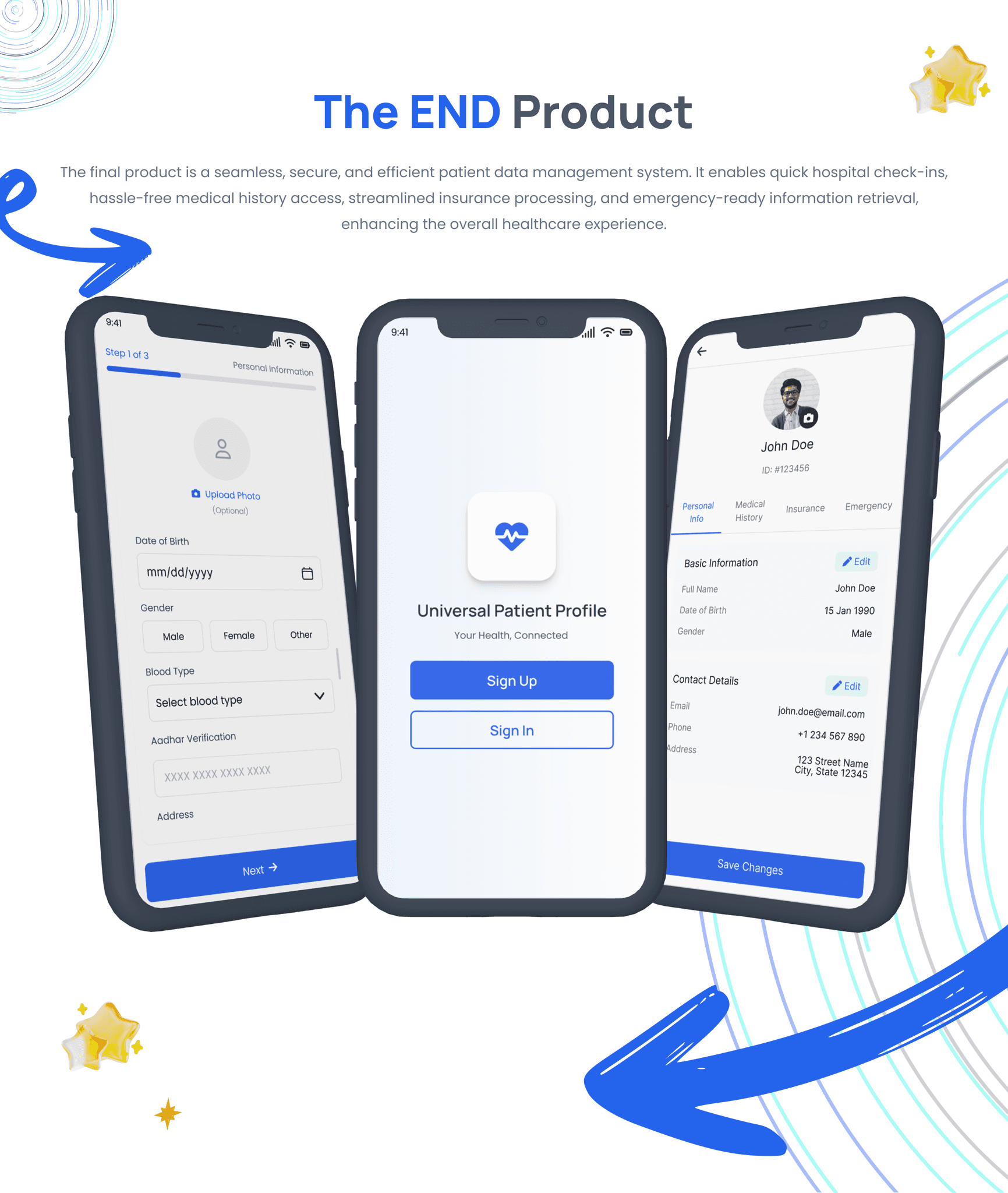
The Universal Patient Profile System (UPPS) eliminates these inefficiencies by enabling hospitals to instantly fetch patient data through a unique ID (QR Code or alphanumeric code). This streamlines onboarding, improves emergency care, and accelerates insurance processing.
How It Works:
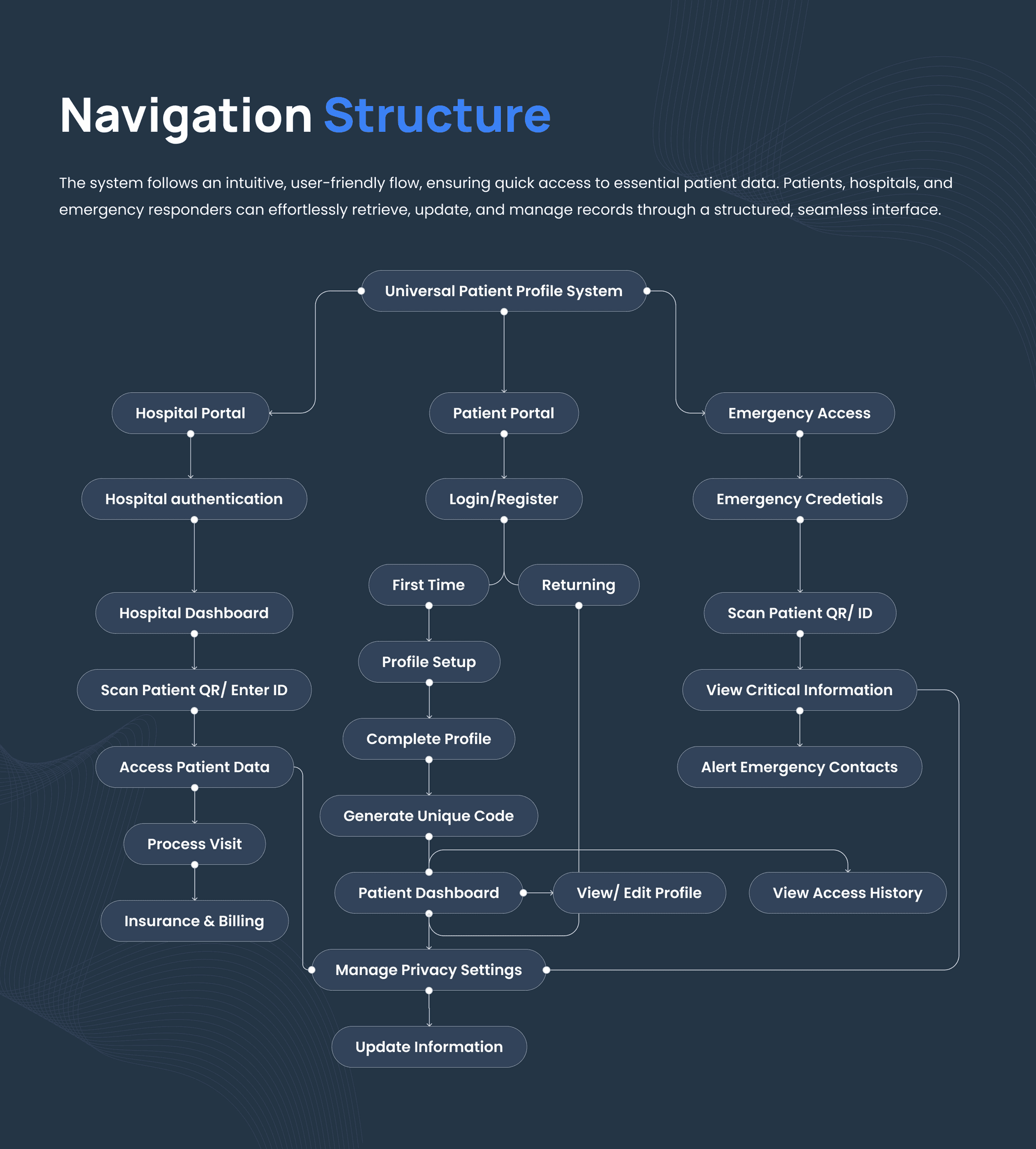
1. One-Time Registration (For Patients)
Patients register via an app/web portal and enter their medical history, allergies, emergency contacts, and insurance details.
A unique code (QR or alphanumeric ID) is generated, linking their profile.
2. Instant Hospital Integration
Hospitals scan the patient’s unique code at the registration desk to fetch all necessary details instantly.
Data is securely shared via API integration or a manual dashboard.
3. Emergency Access & Insurance Processing
First responders can retrieve critical patient details even without the patient presenting their code.
Insurance claims can be pre-approved in real-time, reducing billing delays.
4. Patient Privacy & Control
Patients monitor where their data is accessed and revoke permissions if necessary.
Business Benefits for Hospitals:
✅ Faster patient onboarding = Reduced paperwork & wait times.
✅ Automated insurance processing = Faster revenue cycles.
✅ Better emergency preparedness = Improved patient trust & hospital reputation.
✅ Potential government partnerships = Integration with national health initiatives.
Government Benefits & Public Health Impact:
✅ Centralized health records = Better tracking of diseases, vaccinations, and outbreaks.
✅ Fraud prevention in insurance schemes = Ensures legitimate beneficiaries under programs like Ayushman Bharat.
✅ Better pandemic response = Real-time data access for emergency preparedness.
✅ Improved resource allocation = Hospitals, vaccines, and medicines distributed based on accurate health data.
✅ Data-driven policymaking = Government can craft better health policies by analyzing nationwide patient trends.
Future Enhancements:
Wearable integrations for automatic health updates.
Multi-language support for wider accessibility.
AI-driven preventive care insights for hospitals, patients, and government agencies.
Conclusion
As we conclude this journey into revolutionizing patient data management, it’s clear that the Universal Patient Profile System isn’t just a convenience—it’s a necessity. By solving deep-rooted inefficiencies in the Indian healthcare ecosystem, this solution has the potential to save lives, improve operational efficiency, and streamline insurance workflows.
Why This Matters:
For patients: No more redundant paperwork, lost files, or treatment delays.
For hospitals: Faster processes, better emergency response, and improved revenue tracking.
For the government: A national health database enabling better policymaking, insurance fraud prevention, and improved public healthcare programs.
Though the system is still in its conceptual phase, I believe its real-world impact will be profound. By leveraging technology to unify patient data across hospitals, we can create a smarter, faster, and more efficient healthcare ecosystem—one that prioritizes care over bureaucracy.